Connecting biophysics trainees across Canada!


Amin and his team developed a computational method to identify transcription factor binding sites using data from massively parallel reporter assays. Unlike global statistical approaches, their thermodynamic model reveals local regulatory sites and distinguishes between activating and repressing effects on gene expression. This tool offers researchers a powerful way to study transcription regulation and could be adapted for other data-driven scientific problems.
Amin’s work focuses on one of the fundamental regulatory processes in cells: transcription. Transcription is the process in which RNA polymerase II, an enzyme that binds to DNA, transcribes a specific DNA segment into RNA, which is then used to synthesize proteins. The rate of transcription is tightly regulated by the interaction of RNA polymerase II with transcription factors, proteins that bind to an enhancer or silencer sequence on the same DNA molecule. Depending on the transcription factor transcription is then either up-or down-regulated. Misregulation of this process can lead to diseases like cancer.
In the current study, Amin and his coauthors developed a computational approach to identify transcription factor binding sites using experimental data obtained from massively parallel reporter assays. These high-throughput techniques allow the simultaneous measurement of the activity of numerous enhancer sequences in cells. The assays involve introducing large libraries of potential enhancer sequences linked to a reporter gene, whose transcription and subsequent amplification is activated when transcription factors bind to an active enhancer.
Although computational methods have been developed to identify global statistical patterns of transcription factor binding sites from large datasets, Amin and his colleagues demonstrate that their approach, grounded in a thermodynamic framework of gene expression and applied to simulated and experimental data, can uncover local regulatory sites often missed by global approaches. In addition to pinpointing key transcription factor binding sites, their model also enables the determination of whether each site activates or represses gene expression.
Amin sees their method and code as a powerful tool for efficiently identifying transcription factor binding sites and hopes researchers investigating gene expression will apply it to their own data to pinpoint binding site locations and understand their regulatory functions. Additionally, Amin envisions their computational approach being adaptable to tackle similar pattern recognition challenges in other scientific fields, where uncovering underlying mechanisms from large datasets is key.
Our work is fundamentally computational, built around a thermodynamical model of gene expression similar to the Ising model from condensed matter physics. The core methodology involves fitting this model to experimental data through parameter optimization.
Specifically, we identify transcription factor binding sites and characterize their regulatory roles by maximizing the likelihood of the observed data given our model. This optimization process involves Monte Carlo simulations to efficiently explore the parameter space.
To validate our approach, we first tested the method’s accuracy on simulated data with known parameters. After confirming its reliability, we applied the methodology to experimental data from prostate cancer cells, successfully identifying functional regulatory sites within specific DNA regions.
Yes, there are several exciting applications of our work, particularly in medicine. Since diseases like cancer often result from gene misregulation caused by abnormal transcription factor activity, our methodology can offer valuable insights for therapeutic development.
By precisely identifying which transcription factors are critical within specific DNA sequences, our work can help researchers better understand the molecular mechanisms underlying genomic diseases. This improved understanding could ultimately guide the development of targeted therapies that correct transcription factor binding abnormalities or compensate for their effects on gene expression.
Our next step is to investigate how the transcription factors interact with each other. While our current work finds individual regulatory sites and their roles, we’re now developing methods to map the key gene regulatory network within specific genomic regions. This will reveal how multiple factors work together to control gene expression.
The biggest challenge we faced was a technical one related to model selection. When we fit our model, we don’t know how many transcription factor binding sites exist within a given DNA region, yet this number is a crucial parameter in our model.
To overcome this obstacle, we developed a systematic approach where we fit multiple models, each assuming different numbers of sites within a reasonable range. We then created a method to integrate information across these various models, which enabled us to determine the correct number of active sites in a specific genomic region.
Beyond the potential medical impact of our work, I found the peer review process particularly rewarding. When we initially submitted our paper, reviewers raised substantive concerns that required us to conduct additional analyses and make significant revisions.
While challenging, this feedback ultimately improved our work considerably. When we resubmitted the paper, seeing reviewers express complete satisfaction with the revised version was incredibly fulfilling. Their critical evaluation pushed us to strengthen our methodology and presentation, resulting in a much better version of the paper.
I learned that perfection can be the enemy of progress when writing scientific papers. Rather than trying to complete each section perfectly before moving on, it’s better to draft everything to a good standard first, then go back and improve all sections. It’s like sketching a drawing—you start with the basic outline and gradually add details throughout the whole canvas.
As for submission, I’ve learned to appreciate referee comments, even critical ones. Though it can be disappointing to receive negative feedback, these comments can lead to new ideas that significantly improve the work. The peer review process ultimately made our research stronger.
What kept me motivated was understanding that research naturally has ups and downs. Knowing it’s completely normal to hit slow periods, especially at the beginning of a project, helped me stay positive and persistent.
McMaster University, Hamilton, ON
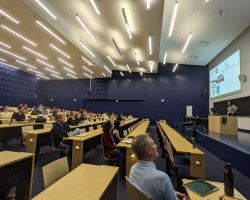
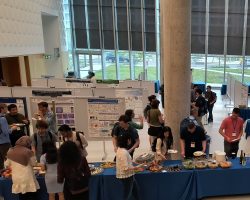
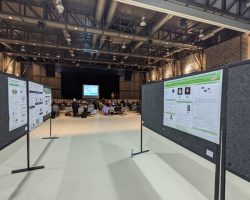
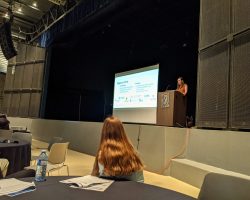
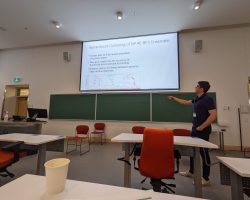
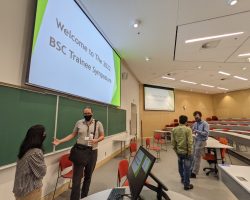
The 2025 Trainee Symposium marked the commencement of the 10th annual Biophysical Society of Canada Meeting. Trainees enjoyed the new interactive workshops in the morning and then had the chance to hear from four career speakers as they discussed their journey to their current positions in the scientific community. During the networking break, trainees had the opportunity to discuss further with the career speakers as well as fellow trainees. Trainees had the opportunity to share their research during the trainee presentation session and continued their great discussions at the new trainee mixer in the evening. Thank you to our career speakers, trainee speakers, all attendees, and to everyone who made this event a great success!
Virtual
The BSC Trainee Executive was delighted to host three wonderful events for this year’s Biophysics Week. Trainees competed against each other in a biophysics and pop culture themed Trivia Night, we heard from Dr. Isaac Li from the University of British Columbia about his research and career path, and we finished the week off with a Gastronomy Workshop where we leaned about gluten while baking bread. Thank you to everyone who joined us at these events!
Virtual
Trainees from across Canada (and the USA) had the opportunity to hear from several biophysicists in academia and industry about the diverse career paths that led to their current positions. Attendees participated in engaging discussions on various aspects of career development, including key considerations when job hunting, initial steps for starting a company, and the qualities employers seek in new hires.
Thank you to our career speakers for sharing their time and expertise, and to everyone who attended!
Université de Montréal, Montreal, QC
Career Speaker Presentations
Career Speaker Panel Discussion
Networking Session
Trainee Presentations
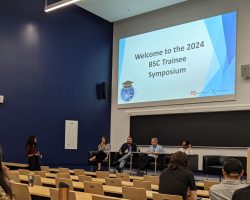
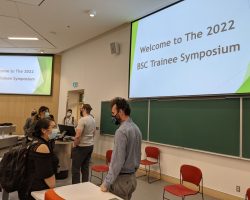
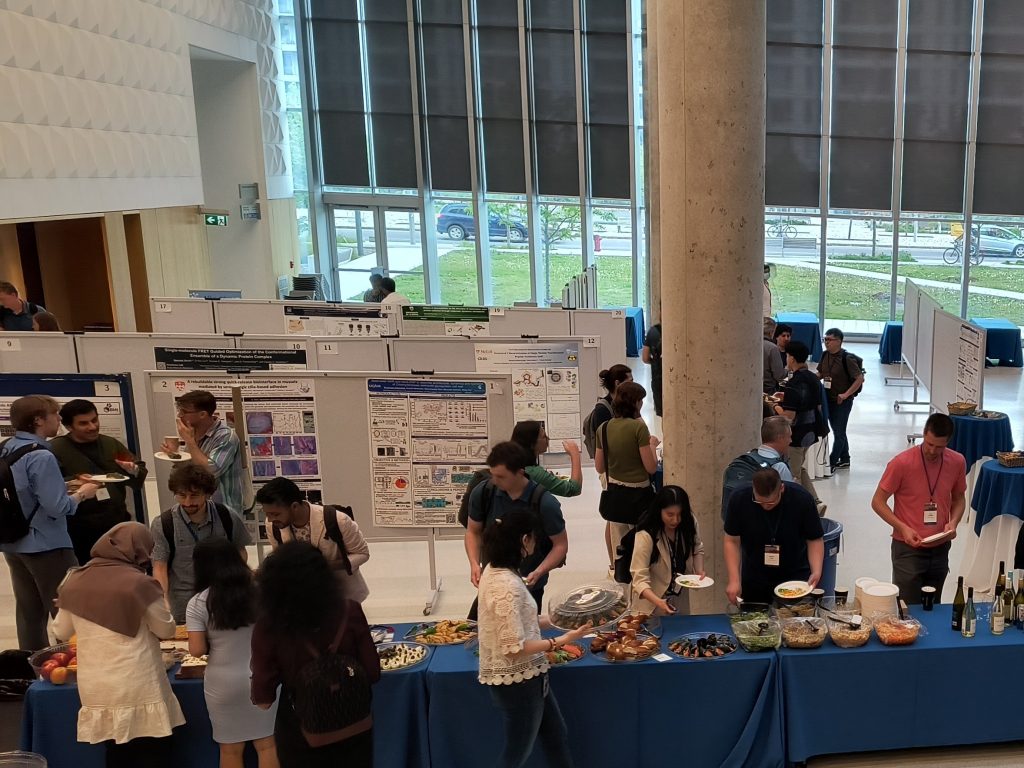
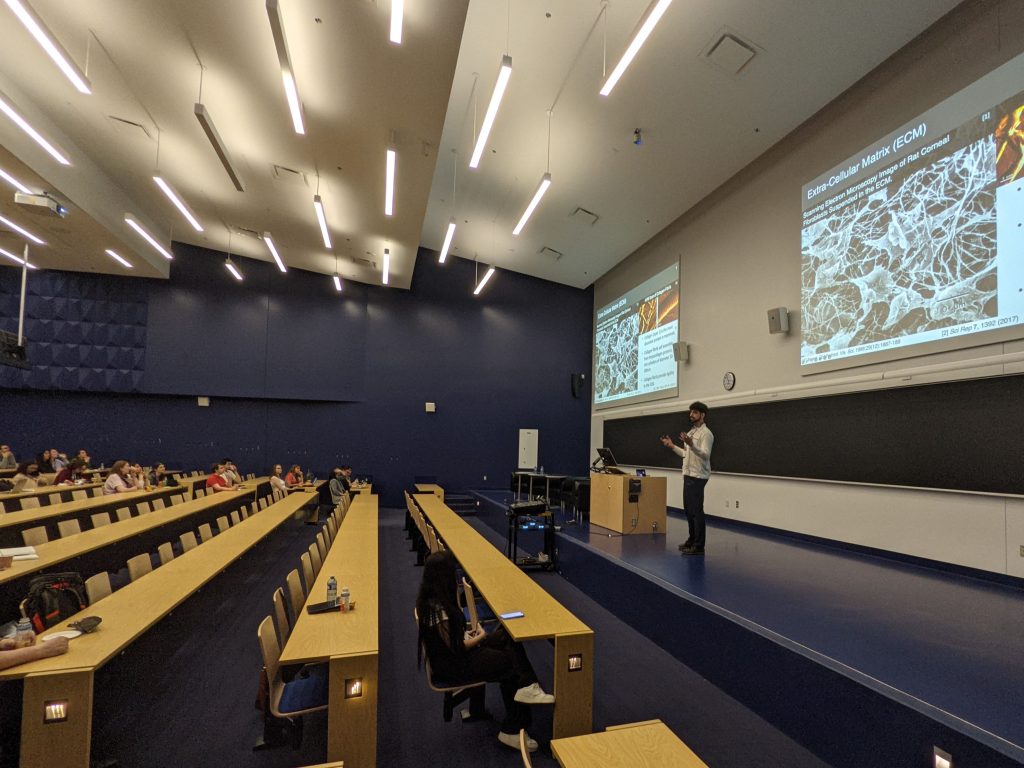
The Trainee Symposium marked the commencement of the 9th annual Biophysical Society of Canada Meeting bringing together trainees from coast to coast. It provided attendees with valuable opportunities to present their research, engage with leaders in various scientific fields, and participate in enriching networking opportunities. Thank you to all our invited and contributed speakers for making this event a great success.
Virtual
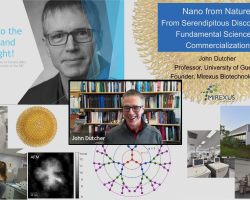
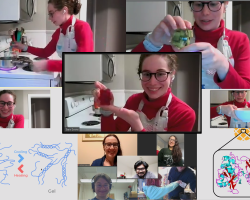
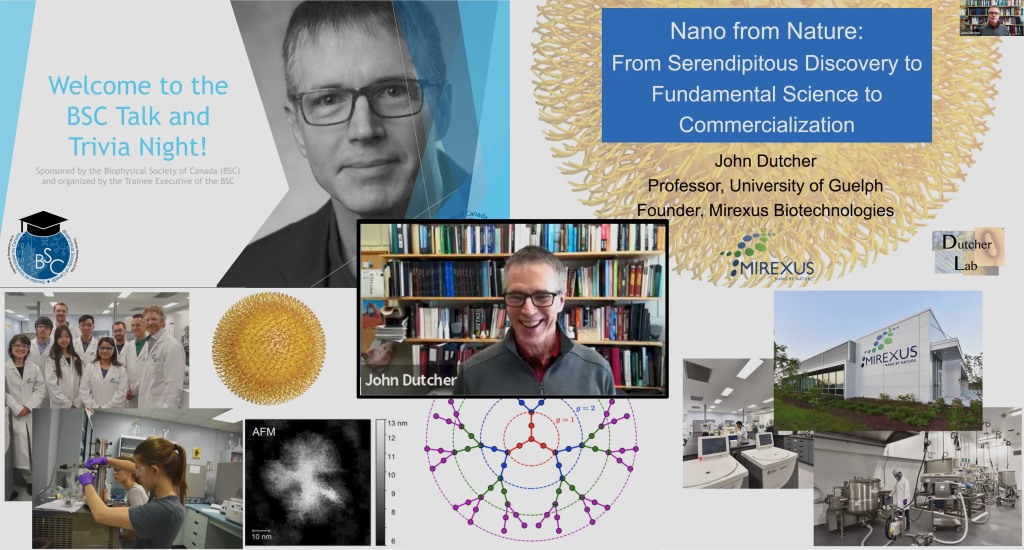
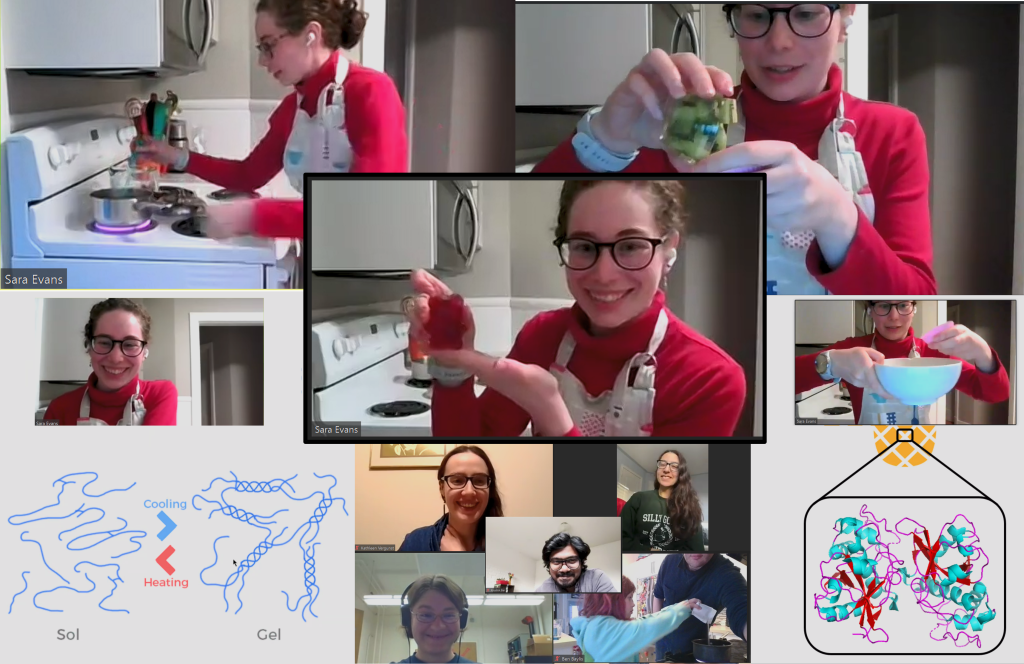
During Biophysics week, we heard from Dr. John Dutcher about his experience in transforming a serendipitous discovery of a unique nanoparticle in his lab into a biotechnology company. We also followed along with Sara Evans as she led a gastronomy cooking class on jellies while teaching us the underlying science and showing us neat experiments we can do in our own home.
See Sara’s gastronomy cooking class event highlighted in the Biophysical Society Newsletter here.

must be signed in to X to view